What Makes Our Runtime Calculator Different?
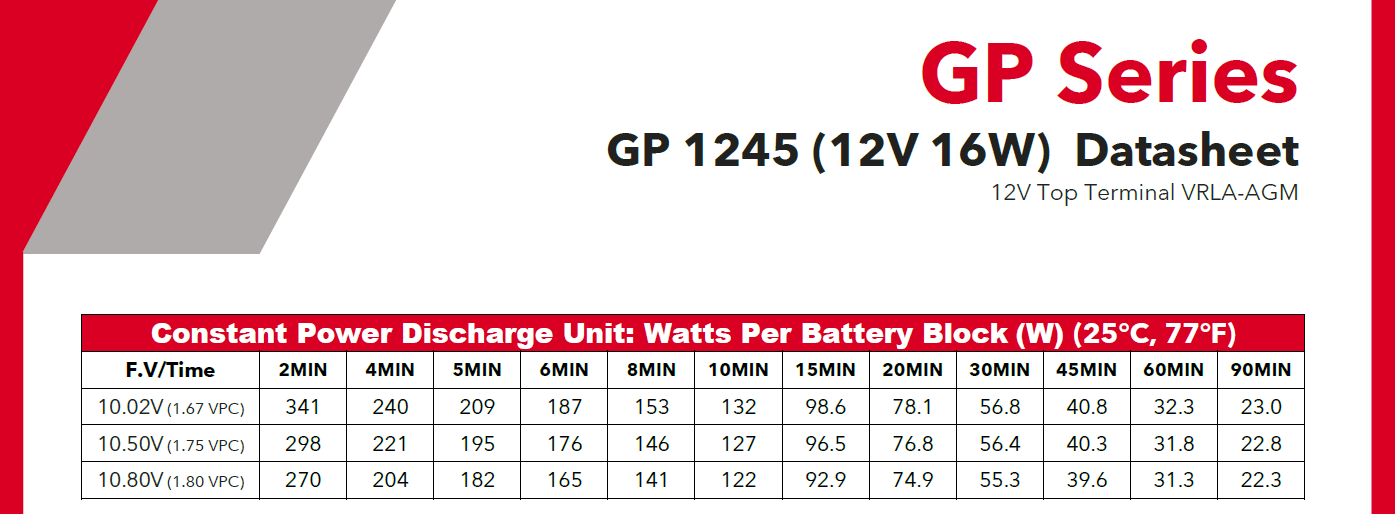
While many battery backup calculators exist online, ours stands out by incorporating actual battery manufacturer data to deliver reliable results whether you’re sizing batteries in Watts (W) or Amp Hours (Ah). Many free calculators provide limited accuracy and leave you wondering if the calculated battery size is even commercially available. For instance, if a calculator suggests you need a 3000Ah battery, you might not know whether such a battery exists. Our calculator addresses this issue by providing results based on standard battery sizes available for Sealed Lead Acid Batteries in the market for stationary load applications.
Achieving perfect accuracy in battery calculations is challenging due to numerous technical factors that influence performance. These include battery operating temperature, type, chemical composition, environmental conditions, efficiency, heat losses, aging, cable losses, connected load efficiency, and proper installation. Since these variables change from one scenario to another, absolute precision is difficult to guarantee. For users with technical expertise who desire more control over these parameters, our advanced battery backup or runtime calculator offers greater flexibility to determine the optimal battery size for your specific backup requirements. In order to use Advance Battery Backup Calculator a user must provide his own battery data. You will find a video tutorial guide to help you navigate through each step. *Visit now!!
How our Battery Backup Calculator works:
As an Electrical Engineer with over a decade of experience in Uninterruptible Power Supply (UPS) systems and battery backup solutions, I understand how challenging battery calculations can be for non-technical users. This difficulty often stems from confusing manufacturer terminology or incomplete information found online. Our calculator simplifies this process by focusing on essential battery parameters, making it accessible to everyone while still providing a reliable tool for informed decision-making.
Who Can Benefit From Our UPS Runtime or Battery Backup Calculator:
• Non-Technical Users:
Ideal for anyone planning to purchase or replace battery solutions who needs to calculate backup time for UPS systems, solar inverters, portable inverters, sump pumps, emergency lighting, fire alarms, generators, access control systems, automatic doors, and similar applications.
• Technical Professionals:
Valuable for contractors, consultants, suppliers, electrical engineers, electronic engineers, IT professionals, telecom engineers, control system engineers, UPS specialists, application engineers, sales engineers, procurement specialists, maintenance technicians, field engineers, and service technicians.
Available Calculator Types and Their Applications:
Currently we have 2 types of calculators.
1) Basic Battery Backup Calculator:
This calculator is designed for non-technical users who need to perform battery calculations with minimal technical knowledge and input requirements. It includes default battery chart data and features a built-in guide that walks you through each step and required value. Perfect for sizing personal electrical backup equipment including:
- battery backup refrigerator
- battery backup for solar panels
- battery backup for Internet router, desktop computer, gaming computer (PC) or other
- battery backup inverter for picnic, camping or outdoor activities
- battery backup security system
- battery backup for critical loads
- sump pump with battery backup
- Etc.
2) Advanced Battery Backup Calculator IEEE 485 Methodology:
This calculator caters to technical professionals such as electrical and IT engineers who require in-depth battery calculation capabilities and greater control over input parameters to achieve precise results. Note that advance calculator does come with default battery charting data. A user must provide specific battery manufacturer data on which calculation will be performed. Suitable for critical applications including:
- battery backup for Uninterruptible Power Supply (UPS)
- battery backup for sump pump system
- battery backup for emergency lights
- battery backup generator
- central battery system (CBS)
- battery for fire alarms
- Telecommunication Network Tower
- Switch Gears System
- Control System
- BMS system
- CCTV & Security System
- Medical Equipment in Hospital
- Etc.
Advantages and Considerations of Our UPS Battery Calculators
Benefits:
- User-friendly interface requiring minimal technical knowledge
- Calculations based on actual battery manufacturer performance data
- Developed from 10 years of practical field experience
- Includes step-by-step explanations and practical suggestions
- Provides reliable results for informed decision-making
Limitations:
- Some basic understanding of electrical loads and batteries is helpful
- The basic calculator is optimized for 12-volt sealed lead-acid batteries, while the advanced battery calculator supports any battery type with available performance data provided by user.
What value you will receive from using our calculator:
- Learn how to properly perform battery calculations and size batteries for your specific applications
- Develop the knowledge to effectively negotiate with contractors and suppliers for optimal solutions
- Gain confidence in making informed purchasing decisions
- Access reliable results from the basic calculator, with even greater precision available in the advanced version
- Enjoy a comprehensive yet easy-to-use toolset
- Streamline your workflow if you’re an engineering professional
Professional Background and Approach:
In my professional practice, I regularly use the “Advanced Battery Backup Calculator with IEEE 485 methodology” and have applied it in over 100 projects worldwide. Through battery discharge testing using load banks, I’ve verified calculated backup times against actual performance. When proper battery chart data and parameters are utilized correctly, the calculator provides dependable backup time estimates. Whereas the “Basic Battery Backup Calculator” offers a straightforward approach ideal for educational purposes and preliminary assessments. Please note that actual backup times may vary between battery models, brands, types and operating conditions. I sincerely hope our calculators prove valuable for your power backup planning needs. Beside our core battery calculators feel free to explore our other calculator and tools which you will find handy.
Specially our Battery Rack Designing Tool which will help you design a quick rack drawings for your and your client’s reference.